


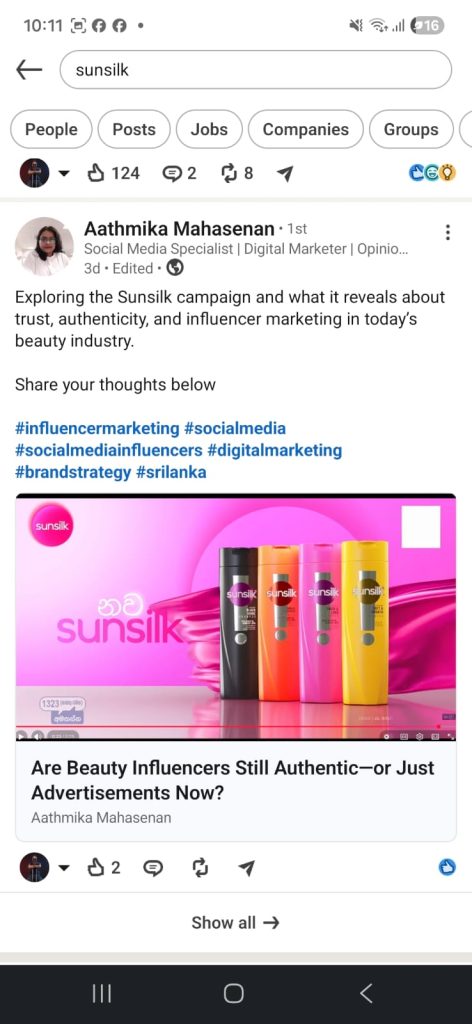
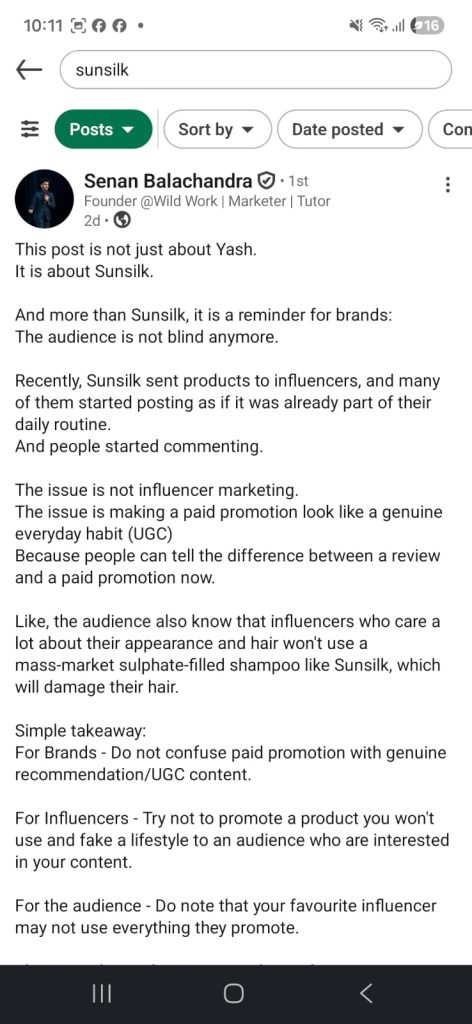
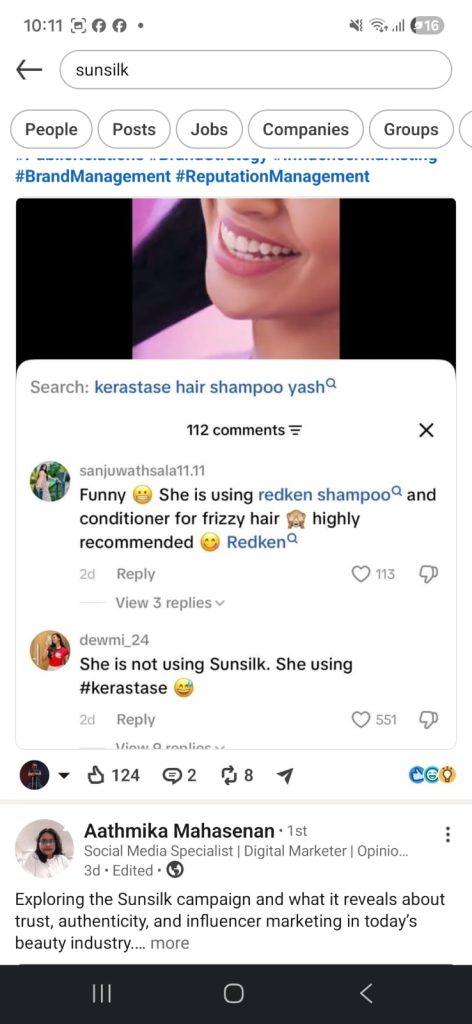
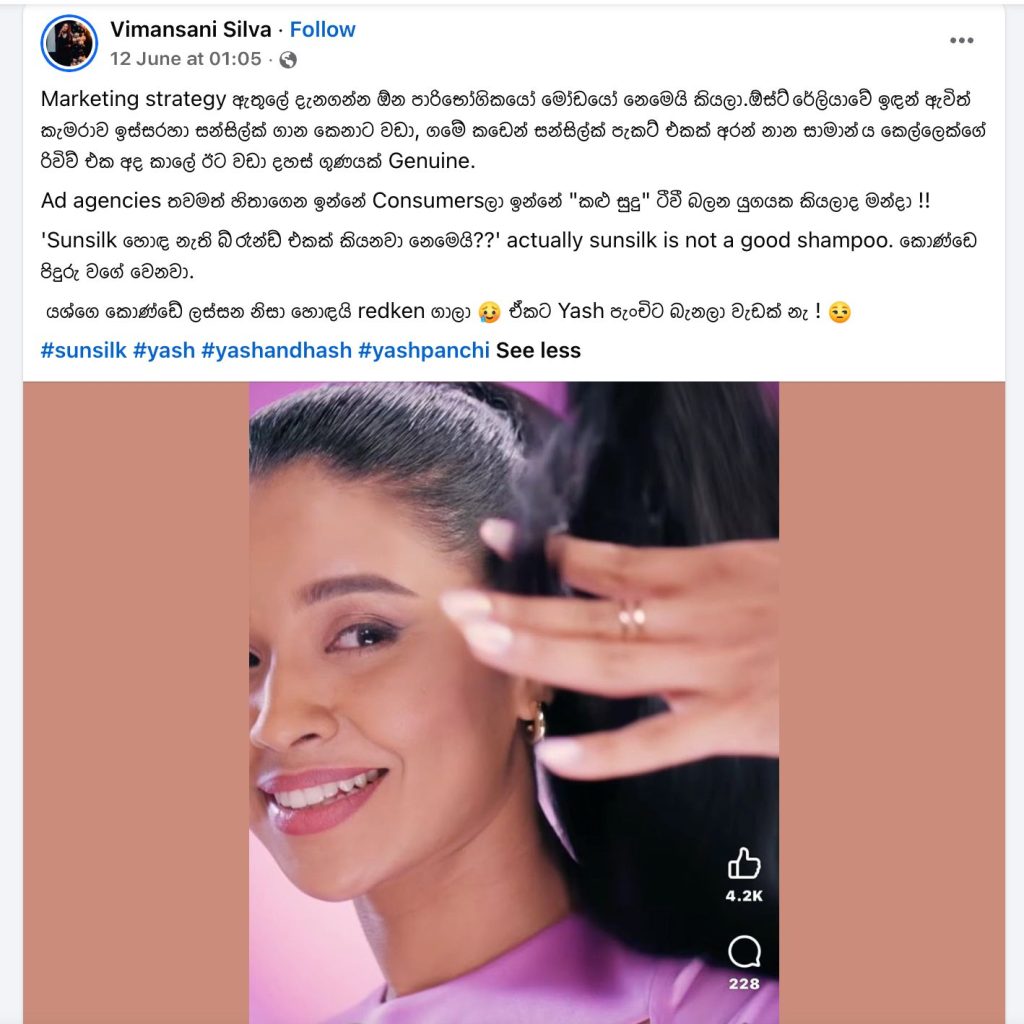
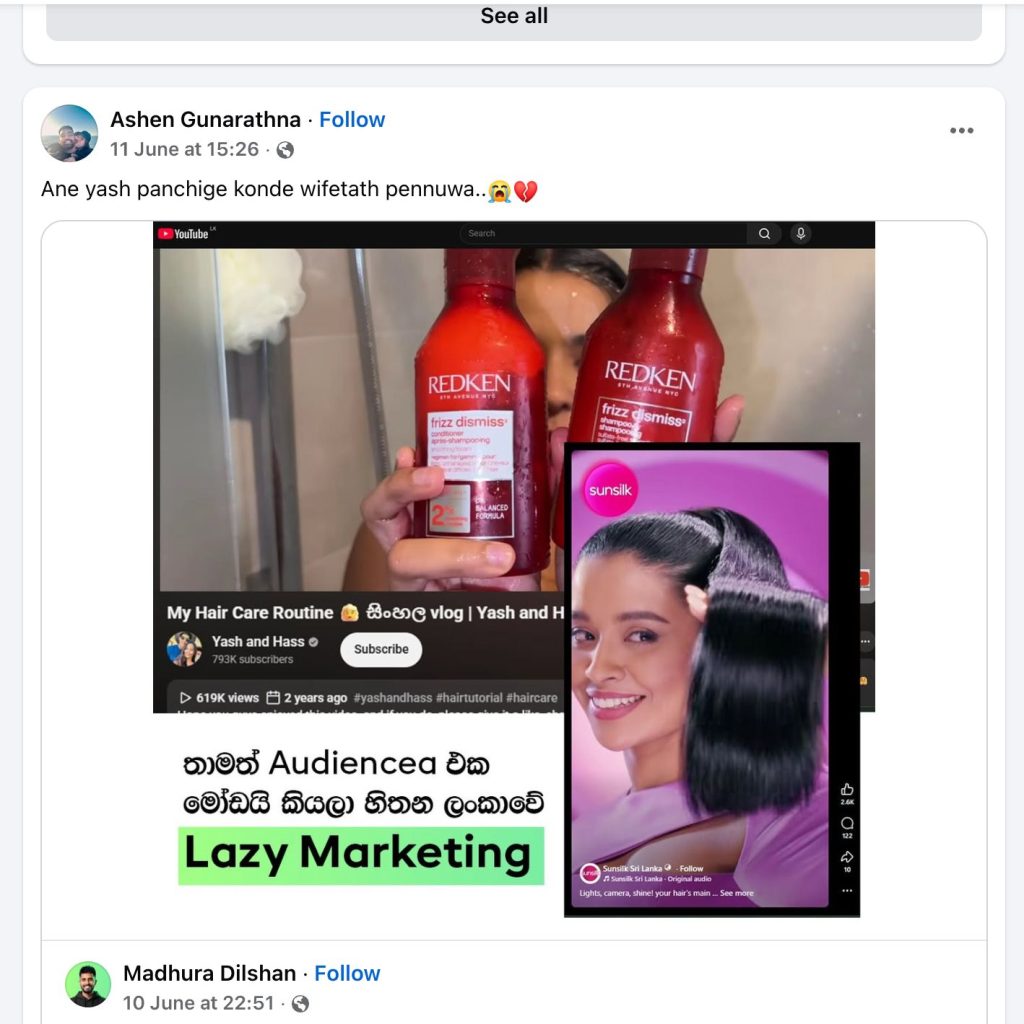
The recent controversy surrounding Sri Lankan influencer Yash’s appearance in a Sunsilk commercial has sparked a heated debate across social media.
The criticism wasn’t directed solely at Yash. Many viewers questioned Sunsilk’s decision to cast her, while others went further and blamed the agency behind the campaign. The argument was simple: Yash is known for using premium imported haircare products, so featuring her in a Sunsilk advertisement was seen as misleading.
But before we rush to accuse brands and agencies of deception, it’s worth asking a more important question.
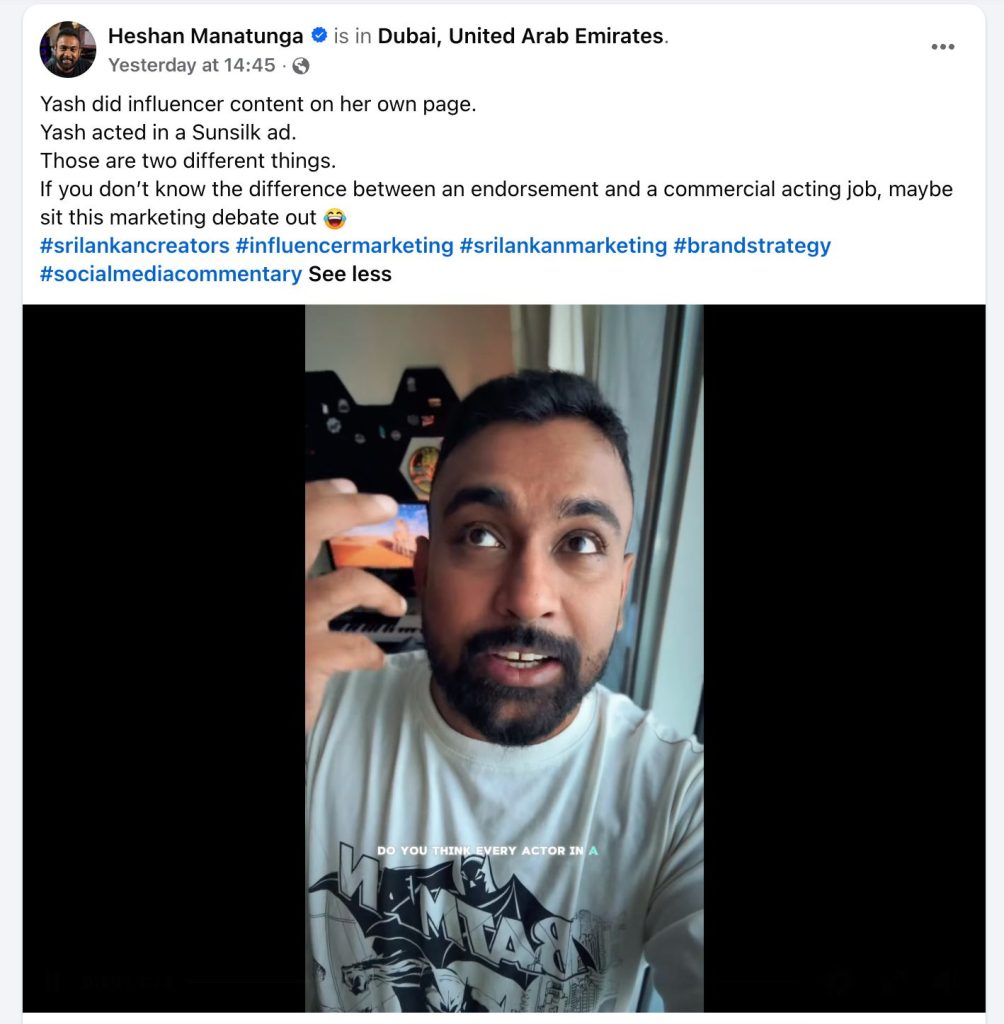
Was Yash endorsing Sunsilk, or was she simply appearing in a commercial?
Because those are two very different things.
When Did Advertising Become a Background Check?
For decades, audiences understood the role of advertising.
When Kumar Sangakkara appears in a banking campaign, nobody assumes every one of his savings accounts, credit cards, investments, and loans are with that particular bank.
When a national cricketer appears in a telecom commercial, nobody demands proof that he uses that network’s SIM card every day.
When actresses appear in Lux or Velvet advertisements, audiences don’t ask to inspect their bathroom shelves.
We understand that advertising often involves talent being selected because they represent a particular image, aspiration, or audience appeal.
They’re performing a role.
So why are influencers suddenly being held to a completely different standard?
The Influencer Difference
The answer lies in trust.
Unlike actors, influencers don’t build their careers through scripted performances. They build them through relatability.
Followers watch their routines, their purchases, their recommendations, and their daily lives. Over time, audiences develop a sense of familiarity and connection.
As a result, followers begin to see influencers less as public personalities and more as trusted friends.
That’s why a recommendation from an influencer feels different from a traditional advertisement.
And that’s why audiences reacted so strongly to the Yash campaign.
The backlash wasn’t necessarily about shampoo.
It was about authenticity.

The Industry Is Mixing Up Three Different Roles
One of the biggest problems in modern marketing is that audiences often treat these three roles as if they are the same.
A Brand Ambassador
Someone who consistently represents a brand over an extended period and aligns themselves publicly with its values and products.
An Influencer Endorsement
A creator personally recommending or reviewing a product to their audience based on their own experience.
Commercial Talent
A person hired to appear in an advertisement because they fit the creative vision, target audience, or desired image.
The Yash conversation seems to have blurred all three categories into one.
If Yash had posted a video saying, “This is the shampoo I’ve used for years,” and evidence suggested otherwise, criticism would be justified.
But if she was cast as talent in a professionally produced advertisement, the expectations should be different.
Advertising has always involved storytelling.
And storytelling often involves casting.
The Double Standard Nobody Talks About
Let’s consider another scenario.
If Jacqueline Fernandez appeared in a Sunsilk commercial tomorrow, very few people would question whether Sunsilk was the only shampoo she used.
If a celebrity chef appeared in a cooking oil advertisement, nobody would assume every meal in their restaurant was prepared exclusively using that oil.
If a vehicle brand signs a celebrity ambassador, we don’t expect that person to own only that vehicle and never sit inside another car.
Yet influencers are increasingly expected to live every brand partnership they participate in.
The standards are no longer those of advertising.
They’re the standards of personal credibility.
And that changes everything.
What This Means for Brands
The real lesson from the Yash-Sunsilk debate isn’t about Yash at all.
It’s about the changing expectations audiences have of modern marketing.
Consumers today are more informed than ever. They can search old posts, compare recommendations, and identify inconsistencies within minutes.
Brands can no longer rely on celebrity status alone.
Authenticity matters.
Context matters.
Credibility matters.
At the same time, audiences must also recognise that not every appearance in an advertisement constitutes a personal endorsement.
A model in a commercial is not automatically a brand ambassador.
An actor in a campaign is not necessarily a long-term user of the product.
And an influencer appearing in a professionally produced advertisement is not always making a personal recommendation.
The Real Question
Perhaps the criticism directed at Yash is actually evidence of something positive.
Nobody fact-checks actors.
People fact-check influencers because they trust them.
The backlash wasn’t really about Sunsilk. It was about an audience trying to protect the authenticity they expect from the creators they follow.
That’s a valid expectation.
But it’s also important to understand the distinction between influence and advertising.
Because if every person who appears in a commercial is expected to be an exclusive user of the product they’re promoting, advertising itself becomes impossible.
The Yash-Sunsilk controversy isn’t a story about shampoo.
It’s a story about how social media has fundamentally changed our relationship with advertising—and how brands, agencies, influencers, and audiences are still learning where the lines should be drawn